
The wind off the Strait cut hard that May morning. The market was waking slow, tables half-open, vendors blowing on their hands. I wasn’t looking for anything—just the walk, maybe a coffee, a loaf of bread.
Then I saw him.
A small man, wiry, with skin dark as old leather. His hands moved in steady motions, placing bottles in a row. His face had been carved by years outdoors, but his eyes were alive, sharp. The sign read: “Olive Oil.”
I stopped and looked again. “Morning,” he said. His voice was heavy with Italy.
“You’re selling olive oil?”
“Yes,” he said, watching me. “From here, Nova Scotia.”
I thought he was joking, but he waited, calm.
His name was Luigi. Calabria was where he had come from thirty years earlier. He told it plain, like he had said it many times. He had worked odd jobs, saved what he could, bought a farm near Malagash. Not much of a farm, but it was his.
What he didn’t leave behind was the olives. His father and grandfather had lived among olive trees. It was in him. He couldn’t let it go.
The first trees froze in their roots. The next year, the same. Winters snapped them off like dry twigs. He planted again. Year after year, he buried saplings in the soil and dug out the gray wreckage in spring.
He said his wife thought it was madness. She told him to stop wasting money. She wanted him to grow what would grow here—potatoes, cabbage, apples. The children laughed at him. They told friends that their father thought he could grow olives in Canada. They didn’t mean to be cruel, but children can be cruel without trying.
Luigi listened, but he kept planting.
“If I gave up” he said, leaning towards me, “then I was finished. I would not be myself anymore.”
So he read books. Sent letters home to Calabria, asking about hardier strains. Built small greenhouses, then larger ones. Trucked in soil. Hung lamps to stretch the light. He worked mornings, nights, and Sundays. His wife turned away from him more and more. Sometimes she said nothing at all, just shook her head when she passed him in the yard.
But ten years in, the trees lived through a winter. He smiled as he told me. “That spring my wife began to believe. Not before.”
By the fifth year, the olives came. Small, bitter, but real. He pressed them, and the oil ran thick and gold.
Still, he fought on. Inspectors, permits, the reserve nearby that didn’t like his lights. He lifted his shoulders. “The cold is not the worst enemy. Bureaucracy is colder.”
When he said it, his eyes flicked for a moment, as though he was thinking of all the men in offices who had told him no.
By the time I met him, he had fought twenty years. His children were grown, gone to cities, not interested in olives or farms. His wife had stopped calling it madness, but she kept her distance from the dream.
I asked him if it was worth it—the winters, the failures, the years alone. He didn’t pause.
“Yes,” he said. “Because it is mine. And because I proved it.”
I bought a bottle. That night I poured the oil into a dish. Golden, thick, carrying a scent older than these shores. I dipped bread into it. The taste was sharp, alive, grassy. Not just oil. It was years of stubborn work. It was him standing against everything that said no.
And I thought, that for Luigi, it had never been only about olives. He needed the fight. And the oil was proof that he hadn’t given up on himself.
Edward Sampson
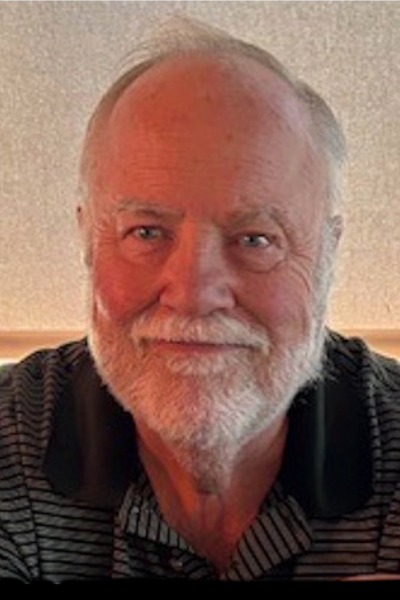
From 1985 to 1997, he served as the Atlantic Communications Director for Natural Resources Canada, guiding regional communications during a period of significant environmental and economic change.
Following his retirement, Edward continued to write, contributing weekly stories to The Light, a North Shore publication in Nova Scotia. He remains active in the province’s literary community and is currently a member of the North Shore Writers Group.
